How can a health care institution carry out its carbon footprint and be part of a climate strategy?
External Newsletter - July 2022

Carbon neutrality is at the heart of governmental and societal concerns and is one of the current environmental challenges. In France, the National Commitment to the Environment Act, known as the "Grenelle 2 Act" of July 12, 2010, has led to the widespread use of greenhouse gas emission assessments for many actors. The health sector also has a role to play, since since 2013, health and medico-social establishments have been required to carry out their carbon footprint every four years.
The decarbonization of healthcare systems is a major and imperative challenge in the face of the climate emergency. As a consulting firm and public health expert, we are committed to participating in this large-scale project and to contributing our expertise. To do so, we have founded a partnership based on the sharing of skills with the company WeCount, a specialist in low-carbon transition support.
By committing to this approach, we hope to help many healthcare organizations to carry out their carbon footprint and thus limit their environmental impact. This low-carbon approach is a way of raising awareness of climate issues among all the professionals involved, patients and partners. Healthcare professionals have a role to play as ambassadors to users.
Best practices: the carbon footprint
What is the carbon footprint?
It is a tool for accounting for the greenhouse gas (GHG) emissions of an organization, a product or an individual over a year.
The emissions accounted for can come from the organization in question, from its energy production or from the entire value chain, upstream or downstream (raw materials, waste, etc.)
The first step is to draw up a low-carbon strategy plan in order to identify the levers for reducing GHG emissions. This will enable us to structure our environmental policy effectively, to reduce energy consumption and thus the associated costs.
Carbon footprint in the health sector
According to a study by the Think Tank The Shift Project in November 2021, emissions from the healthcare sector represent 8% of French emissions.
In France, hospitals must now comply with sustainable development criteria in order to obtain hospital certification from the Haute Autorité de Santé (HAS).
Numerous hospitals have undertaken to produce and publish their carbon footprints, which has enabled them to identify the main sources of emissions for hospitals: incoming materials (medicines, medical equipment, etc.), energy consumption and travel (by professionals and patients). Subsequently, initiatives to reduce GHGs related to these items have been implemented.
Given the urgency of climate change and the consequences of global warming, health care institutions must now :
- Define ambitious climate strategies, in line with the Paris Agreements,
- Putting healthcare facilities in motion with concrete reduction actions,
- And train the teams to sustain the commitment over time to the low-carbon transition.
The GovHe - We Count partnership
Our approach is based on a strong partnership with WeCount, a company specializing in low-carbon transition support.
This company has developed an innovative platform for calculating CO2e emissions that makes it easier and more reliable to carry out a carbon assessment. It also facilitates the appropriation of the carbon footprint by the teams, since the user can update it in real time according to the modifications made by the establishment.
Work carried out with the pharmaceutical industry has given WeCount in-depth knowledge of one of the main emission sources specific to the hospital sector: the purchase of drugs and medical devices.
Within this partnership, GovHe, an expert in public health, brings its expertise and experience in the operational functioning of health care institutions, particularly on :
- The organization of the project to collect the data and develop the climate strategy,
- The definition of an ambitious and realistic action plan taking into account the operational constraints of health care institutions.
the proposed approach
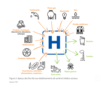
The proposed approach consists of 4 steps (see diagram below). It leads to the evaluation of the organization's GHG profile and the identification of its main emission items. In addition, it involves stakeholders in the development of the reduction plan, through workshops.
Finally, the training of the project owner in the use of the tool and in the monitoring of the assessment is carried out in parallel with the different phases of the project in order toensure a progressive increase in competence.

Team mobilization, a key success factor
In order to carry out a carbon assessment and an action plan that is part of a process of evolution of the structure, it is essential to involve the teams in its construction.
Mobilization of the field is a key success factor. In this context, and thanks to the partnership between GovHe and WeCount, we propose workshops with the teams to establish a participative process. In addition tosystematically involving stakeholders in data collection and in the development of the reduction plan, a "Climate Fresco" workshop is usually offered as an option to raise staff awareness of the general understanding of climate change issues.