The added value of collaborative methods in your internal reorganization projects
External Newsletter - October 2022

Since the health crisis, collaborative work has undergone a major revival . These consecutive months of teleworking have undermined the links between professionals in the health and medico-social sector.
Human interactions have been limited, favoring work in silos, especially in multi-site environments. In this post-crisis context, the usefulness of collaborative methods in projects is all the more important. They are an excellent means of encouraging exchanges and understanding of others, with the effect of improving the efficiency of structures both in terms of their internal functioning and the service provided.
This month, we share with you a project on which we deployed an intense collaborative process over a six-month period: The John Bost Foundation's reorganization project.
The John Bost Foundation
Presentation of the structure
The John Bost Foundation is a private, non-profit health and medical-social institution. It welcomes, cares for and accompanies more than 1,900 people (children, adolescents, adults and the elderly) suffering from psychological disorders and physical and/or mental disabilities as well as dependent elderly people.
The Foundation has undergone a major transformation over the past 10 years. It is now composed of 38 establishments spread over the western coast of France. In order to accommodate this significant growth, the Foundation has structured its organization into three sites grouping together several establishments.

The origin of the reorganization project
In light of these territorial and organizational changes, it was decided to reorganize the functioning of the cross-functional services and the General Management. With extensive experience in change management and organizational project support, GovHe assisted the Foundation in this structuring process, with the key factor being the implementation of collaborative methods.
Interview with Hélène Antonini-Castera, Secretary General of the Foundation
Why did you decide to call on GovHe?
Our first ambition was to have an external viewpoint that would allow everyone to be heard and to express themselves. Moreover, the reorganization project was taking place in a post-Covid context, a period synonymous with major changes and with the prospect of relocating the General Management and cross-functional services, which had a major impact on professional and personal organizations.
What were your support needs?
This reorganization project was an opportunity to take a step back from our current organizations, and above all to reexamine them. It was also an opportunity to initiate a new, more creative and agile mode of operation, in line with changes in the sector. The support offered by GovHe fully met our needs: listening, co-construction and agility.
What are the results observed?
The support provided by GovHe first of all allowed everyone to understand the project challenges. In addition, the collaborative methods put in place encouraged all departments and services to continue working together using the tools proposed by the firm. Finally, this support allowed the transfer of managerial skills and above all the emergence of a target organization co-constructed with all the professionals involved.
Co-construction as seen by GovHe
A methodology based on the ownership of the actors
Reorganization projects are strong markers in the history of an institution, both symbolically and organizationally.
We are aware that such large-scale projects can be difficult for all professionals. This is why we have chosen to offer support based on a collaborative and agile approach. Our methodology is based on the ownership of each person. Without a collective approach, ownership is much slower.

Our role: to build a framework of covered and collaborative cooperation
Our role was to initiate an individual and collective journey to create a new dynamic. To do this, we set out to build an open and collaborative framework for cooperation.
The aim was to create a space for discussion and exchange around the project, allowing everyone to express themselves. We began by meeting with the professionals individually, and then involving them in collaborative work in the form of either traditional workshops or collaborative seminars.
Collaborative seminars, key moments for the success of the project
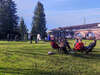
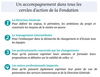
The John Bost Foundation's reorganization project was punctuated by some strong moments: the collaborative seminars. Organized over a day, these moments of exchange were essential for the progress of the project.
During these major stages, our role was to prepare the working conditions beforehand and, on the day itself, to accompany the professionals in the collaborative process. The collaborative methods we put in place allowed everyone to speak freely. Each professional involved was an actor in the project and could take ownership of it.
These moments allowed the group to :
- Milestone the project with broad sharing of information on the elements produced by the project,
- Confront these elements with internal partners to ensure that they meet the defined issues,
- Ensure good knowledge throughout the organization.