
Practical considerations for developing lump sum payments on a per episode or per course basis
Hospital Finance - June 2018
The experimentation project for organizational innovations in the healthcare system provided for in Article 51 of the LFSS 2018 has been launched. Many healthcare stakeholders are already starting to think about and propose projects, but may feel helpless in the face of the complexity and the many points that must be considered in the design of these packages. Ranging from highly technical topics, such as determining an appropriate payment amount, to the relational issues involved in sharing risk among partner organizations, the
the process of building a lump sum payment is fraught with questions.
The first experiments on new pricing methods
are beginning to take shape in France
Following the installation of the strategic council for health innovation on April 5, 2018 by the Minister of Health, Agnès Buzin, the generic framework for experimentation to bring about organizational innovations in the health system has been specified.
Voluntarily designed to allow for a flexible and agile mode of operation, the system allows all stakeholders to propose projects, which will be evaluated by the technical committee as they go along. In a co-construction process with the national support team and the technical committee, the projects will be refined and their scope defined as local, regional, interregional or national.
A flat rate could encourage better quality and lead to lower costs of care
Among the various types of possible experiments, financing by episode or by care pathway appears to be a key avenue, and a call for expressions of interest for four surgical treatments has already been launched.
The episode or pathway package is defined as a single fixed payment to cover a number of treatments during an acute episode (e.g. hospitalization and associated pre- and post-hospitalization care) or a chronic disease over a given period. This fixed fee pays for all the actors involved in the management of the episode and all the resources required for this management.
By bundling the payment of all care related to an episode or pathway, the financial risk of possible complications is transferred from the health insurance system to the healthcare actors, who become financially responsible for the quality of care they provide.
But there are many things to consider when creating and implementing a package
While the benefits of a lump-sum payment are easy to see, there are many practical issues involved in implementing these new financing methods (Figure 1).
Medical issues
These issues need to be resolved with real participation and commitment from physicians. In particular, it is a question of choosing the pathology for which it makes sense to switch to an episode-based payment. For this, criteria such as the existence of well-defined clinical pathways and standardized protocols, as well as pathology volumes, are very important.
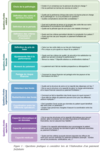
Issues related to the cost of care also need to be considered. For example, the existence of excessive costs or high variability in costs among providers for patients with similar characteristics indicates that a shift to episode-based or pathway-based payment may be beneficial.
Once the condition is determined, it is necessary to specify what care is to be included, which is normally decided on the basis of its clinical relevance to the overall treatment of the condition in question (e.g., a foot amputation would be included in a lump sum payment for diabetes, but a hip replacement would not). While both acute and chronic conditions can be included in a lump sum payment, it is more difficult to determine the exact content of the lump sum in the latter case.
Likewise, a consensus on the precise timing of the beginning and end of the episode must be obtained, but this aspect is normally easy to determine when treatment protocols are well standardized. The episode should also include guarantee periods for possible complications arising from the initial intervention or treatment administered.
Finally, it is essential to be able to determine the profiles of patients who can be included in the package and those whose characteristics are so complex that it becomes more relevant to exclude them.
Financial Issues
Once the scope of the episode has been determined, the financial aspects must be addressed.
Generally speaking, the lump sum payment has three parts:
- a base price - calculated either on the basis of actual costs or on the average
historical values less an estimate of the amount associated with "potentially avoidable costs
- a patient risk adjustment - to avoid excluding patients who might be "too expensive", the base price should be adjusted according to the patient's characteristics, both in terms of clinical severity, physical condition, and socioeconomic situation (e.g., isolated patient). There is no reason to make this adjustment in cases where the criteria for including patients in the package are so demanding that the eligible population is very homogeneous
- performance-based modulation - this third component is not mandatory, but may be relevant. It involves introducing a bonus or malus to the final price depending on the values of certain quality, process and/or patient satisfaction indicators. This can be measured against absolute targets or relative improvement over past performance.
After the payment amount is decided, it is necessary to decide how the payment will be made. In particular, whether it will be made prospectively or retrospectively and how the risk is shared between the payer and the various providers of care.
There are also three options for sharing the risk of a lump sum payment:
- gain sharing - in this case, the provider is not responsible for paying the additional costs incurred above the package amount, but shares the savings against the price target with the payer
- loss sharing - in this case, part of the costs incurred above the fixed price must be borne by the operators
- Total risk - in this case, providers take full responsibility for costs incurred beyond the package price.
In general, a gradual evolution from gainsharing to total risk occurs as a better understanding of the real impacts of implementing a package is achieved.
Organizational Issues
One of the key success factors for the implementation of lump sum payments is the integration and transparency between the different actors involved in the process. This is one of the main difficulties of the French system, which is still very fragmented.
One of the key issues is the choice of fund holder. In cases where the majority of costs are generated in the hospital, the hospital remains the obvious choice, since it also has the administrative capacity to manage the packages. In cases where the pathways involve a large number of actors or where follow-up in the city is the primary part of the pathway (as in the case of certain chronic diseases), it may be appropriate to identify a fund holder external to the hospital or, possibly, to create an ad hoc organization that would also be responsible for redistributing the funds.
Capacity issues
A final point not to be overlooked is the ability of organizations to set up and manage the implementation of packages.
One of the first points is obviously the IT and data analysis capacity. For example, it is necessary to be able to trace all the costs associated with the episode, even those that were not incurred within the institution that manages the package, in order to be able to reconcile and evaluate them.
In addition, all aspects related to quality and patient satisfaction must be collected and included in the evaluation.
This necessarily implies that the institution has the administrative capacity to do so in terms of human and financial resources.
Finally, it is worth considering whether the bundle should be associated with a certain level of medical capacity, for example, whether a minimum threshold of procedures should be required for a facility to be eligible for the bundle payment.
Establish a relationship of trust
The implementation of a package implies in most cases the coordination of several actors who are generally not used to working together. Agreement between the various stakeholders on the different operational aspects can therefore be difficult. In the experiments carried out abroad, many rounds of discussion were held between the participants, particularly between the payers and the care providers, so that trust could be established between them.
Indeed, since a lump sum payment requires complex data analysis and economic modeling, the various actors need time to be able to grasp the full dimension of the impact that the change in remuneration would have on their activity, behavior and financial situation.
It is also necessary to find the right compromise between the interests of the providers of care, such as the fact that they can exercise a certain level of control over the activities for which they will become responsible, and those of the payers, whose main aim is to maximize efficiency and encourage better quality of care.
If a relationship of trust cannot be established, there is a risk that an agreement will only be completed for a package concerning a small group of very homogeneous, low-risk patients or patients who differ little from the current GHS. Therefore, the real impact of an episode-based payment remains limited.
From planning to experimentation
The planning period can be quite long and in countries where this type of payment has been tried, it can range from 6 months to a year.
Between the planning and the launch of the experiments, the timeframe can vary greatly and depends mainly on the motivation, the pre-existence of a consensus and the initial structural organization of the actors involved.
In all cases, the experimentation can only be implemented if the organizations in question are capable of moving to a project mode and if real leadership exists on the part of both the medical and nursing staff and the management.
Conclusion
The pace of the launch of experiments on innovative financing methods for the health system is accelerating and we are seeing many players interested in being the carriers of these projects.
However, these are complex experiments that involve highly technical and change management issues.
The approach to constructing these packages must therefore be very systematic, but flexible, in order to create a package that is economically viable and promotes efficiency and quality, but also to encourage the adherence of physicians, who must find real meaning in it.
References
Ministry of Solidarity and Health, " Meeting of the strategic council for health innovation ", April 5, 2018.
J. Jacobs, I. Daniel, G.R. Baker, A. Brown, W. P. Wodchis, " Bundling Care and Payment: Evidence from early adopters ", Institute of Health Policy, Management & Evaluation, University of Toronto, August 2015.
Health Care Incentives Improvement Institute, " Bundled payment across the US today: Status of Implementations and Operational Findings."
HCAAM, " Document n°15 Rémunération à l'épisode de soins - annexe au rapport Innovation et Système de Santé ", February 25, 2015.
A. Girault, C. Gervès-Pinquié, E. Minvielle, " Les modes de paiement à la coordination : état des lieux et pistes pour une application en France ", Journal de Gestion et d'économie médicales, 35 (2017) 109-127.