
Primary care payments: financing incentives for comprehensive, coordinated care
gestions hospitalières n°603 - february 2021
Fee-for-service remains the primary funding model for primary care in France. It ensures continued access to care in most urban areas. However, it does not address issues such as the shortage of doctors in certain areas, unnecessary procedures, tailoring comprehensive care to the patient’s needs, and the lack of incentives for coordinating care pathways. This system is also becoming less and less attractive to new generations of general practitioners. Several types of pilot programs aimed at evolving primary care payment models are emerging under Article 51 of the 2018 Social Security Financing Act. The link between primary care payment models and the efficiency of health systems remains a difficult goal to achieve. While the trend is toward diversifying payment models within a single system, learning from the maturity achieved by models tested in other countries will allow for a vigilant approach regarding their hidden effects, and thus help strike the right balance among systems considered innovative.
The French model
A majority practice in countries such as France, Luxembourg, Australia, Quebec and Taiwan, fee-for-service primary care aims to remunerate practitioners according to the number and nature of services provided. While this method of payment encourages doctors to be more productive, which de facto translates into better access to care, each care provider is encouraged to consider his or her practice on an individual basis, which does not encourage the coordination of patient pathways - essential in particular in the management of chronic illnesses - nor the adaptation of care methods to the complexity of patients - issues that are becoming increasingly central to the organization of care.
The idea of a lasting relationship between patient and doctor is thus put to the test by the fragmentation of the system, where the encouragement of individualism and the absence of a genuine global primary care project lead to a focus on one-off treatments.
What's more, although practitioners enjoy the possibility of flexibly increasing their income, their entire activity is not taken into account: up to 25% of GPs' activity is not coded in payment standards, particularly administrative and coordination tasks(1).
Private practice is becoming less and less popular with younger generations of doctors: in France, 62% of new registrants in 2018 opted for salaried employment (see box), compared with the historical one-third(2).
These new mentalities reveal a preference for the comfort of practice, in particular the security inherent in teamwork, the absence or reduction of administrative tasks, shorter working hours (generally 35 hours versus 60 in the private sector) and security (no investment, guaranteed income, better social protection...), over the flexibility of a private sector activity that is often better paid but also more risky and demanding.
Capitation tax
Widely used in several OECD countries such as Ireland, Spain, the Netherlands and Italy, capitation is a system based on a population approach, where payment is global and assumed to cover the cost of care for a given group of people. The population considered for calculating the practitioner's remuneration is generally his or her regular patient base. The doctor receives payment per patient and per unit of time (typically a month), regardless of the level of service actually provided: he or she does not produce individual invoices for visits.
The amount associated with each potential patient depends on an estimate of the level of risk attributed to the population category to which he or she belongs. The breakdown can be more or less detailed. In the Netherlands, the distinction is made on the basis of age (over or under 65) and adjusted using a "social deprivation index" that characterizes social level. This index is evaluated by the postal code of residence(3).
While the logic of procedure volume seems to have been avoided, this system risks giving way to a logic of patient volume. The danger here is that we could fall into the opposite extreme: risk aversion. In practice, GPs seem to be accepting more mild cases, but not particularly fewer high-risk cases(4). In addition, there is a risk of increased referral to specialists (5) for care that they could have provided themselves, or even greater use of emergency services(6).
While the capitation system has the advantage of a degree of administrative simplicity and control over healthcare expenditure, it is generally combined with other forms of income, as in the Netherlands, where a GP receives a minimum capitation of €16 per patient per quarter(7) and charges a further €10 per consultation.
A crucial issue in healthcare policy, remuneration methods are on the political agenda in several countries.
In France, several experiments are underway as part of the scheme created by Article 51 of the 2018 LFSS. This is the case with the Peps scheme - payment by teams of healthcare professionals in towns and cities - a system similar to capitation, which is based on the collective remuneration of professionals organizing themselves to provide care for a given patient base on the basis of a lump-sum system, replacing payment by activity. Lump-sum payments are calculated for the patient population concerned and adjusted for patient characteristics (age, gender, CMU-C, type and number of ALDs), local
(poverty rate), as well as to the quality of care, and free in their use and distribution between healthcare professionals.
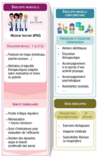
Figure 1: System tested by Ipso multidisciplinary healthcare centers
Other schemes currently being tested include one run by the Paris-based Ipso multidisciplinary health centers, where a capitation-type system is designed to facilitate care by different categories of health professionals and improve prevention, based on a lump-sum system. These include a monthly envelope per patient, which replaces the fee-for-service payment and is intended for the attending physicians, who undertake to carry out primary care follow-up within the practice, but also to pay a fixed fee for each patient.
also to establish with the patient a complementary care pathway not currently covered by health insurance (psychological support, social assistance, translation, psychomotor rehabilitation, etc.),
translation, psychomotor rehabilitation, etc.).
These are covered by a complementary annual envelope (which may not exceed 15% of the total amount of the monthly packages paid to the attending physicians) intended for the practice's partners who provide these complementary services.
partners who provide these additional services.
In a number of OECD countries, the level of remuneration paid to practitioners is adjusted by a performance incentive based on indicators that typically relate to the supply of care itself, the quality of the organizational process and economic efficiency. In theory, this allows payers to develop strategies to encourage certain practices. This may go beyond financial incentives:
if performance indicators are made public, it is in the latter's interest to make themselves attractive. However, the collection and verification of indicators introduces considerable administrative complexity, which limits this form of remuneration to a role as a complement to another
base system.
In France, the "médecin traitant" reform initiated in 2006 led to the introduction of the individual practice improvement contract (Capi) (comprising three axes: prevention, chronic disease monitoring and prescription optimization), and since
of chronic diseases and optimizing prescriptions), and since 2011, remuneration based on public health objectives (Rosp), which rewards the achievement of health objectives based on a battery of indicators that are constantly evolving.
The latest Rosp report shows an overall improvement in indicators, particularly in terms of prevention (with the exception of cancer screening) and optimizing prescriptions(8). These additional payments represent an average of €4,820 for adult GPs in 2019(9) , or around 5% of their average net salary.
Other payment methods are currently being tested in France, such as bundle payments, an intermediary between atomized payments such as fee-for-service, and globalized payments such as capitation:
- payments per care pathway are based on a global lump sum paid to the practitioner for a given patient, according to his or her pathology: the payment may be a one-off payment or renewable over a certain period of time, but the amount does not vary according to the procedures performed in practice. The lump-sum payment is calculated on the basis of a standard care pathway: it is therefore particularly well-suited to chronic illnesses, cancer and pregnancy. However, its implementation is complex because, in this context, a relevant remuneration system needs to encompass several healthcare professionals in town: healthcare providers can then receive a global payment and contract among themselves to redistribute the funds, which presupposes a suitable legal structure and often requires the creation of ad hoc legal models. Episode-based payment does not therefore appear to be suitable for scaling up to an entire system for one country, but it does appear to be interesting for pathologies that lend themselves to it. In France, this type of payment is currently being tested by several schemes under Article 51. This is the case of Peps diabète, which borders on capitation, and aims to test the implementation of a monthly lump sum paid to a multi-professional team in charge of primary care for a given patient base of diabetic patients (types 1 and 2);
- shared saving programs are also set to expand rapidly with the introduction of Article 51-type experiments, including the Incitation à une prise en charge partagée (Ipep), which is being tested in France this year, and is designed to encourage different professionals to organize themselves to meet the healthcare needs of a common clientele. In practical terms, this is a collective incentive payment that can be made to a group of healthcare professionals (such as a multi-professional health center, a CPTS, etc.) if its members meet targets for controlling expenditure and improving the quality of care for a given population. It is therefore not a substitute for, but complementary to, the main methods of remuneration, and does not entail any financial penalties in the event of failure to meet the targets set.
Towards mixed systems
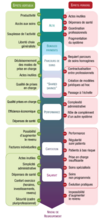
Figure 2: Evaluation of primary care remuneration methods
Most healthcare systems adopt a basic operating model (often capitation or pay-as-you-go) and introduce nuances or derogations specific to certain types of care.
Different types of remuneration can thus coexist, as in Spain, where GPs receive part salary, plus capitation income and a performance-linked top-up(10). The system can also be mixed on a geographical scale. In Canada, responsibility for the healthcare system lies with the provinces, which set up a regional system.
An interesting case in point is the province of Ontario, the most populous: since 1990, general practitioners have been able to choose their mode of remuneration from a menu that has expanded over the years(11). Seventeen models exist in all, including various combinations of capitation, fee-for-service, salaried work, performance incentives, etc. Although the healthcare system has since been audited, the reform did not include a comprehensive evaluation process, and its impact is unfortunately poorly assessed, which is something that needs to be well defined before implementing such a complex system.
Article 51: a secure adventure in uncharted territory
The three traditional remuneration methods (salaried, fee-for-service and capitation) do not individually appear to be sufficient to encourage a relevant volume of care. While the trend towards diversification of primary care remuneration systems within a given territory is aimed at striking a balance between relevance, quality and coordination of care, and attractiveness to the medical profession, the link between different primary care remuneration systems and the efficiency of the various systems remains difficult to demonstrate. A transition to a system made up of different financing modes seems necessary, but generates a multiplicity of financing modalities to be managed in parallel, making it difficult to design, implement and evaluate.
Article 51 draws on the experience and creativity of healthcare professionals and practitioners in the field to tackle healthcare financing issues and propose experiments that will enable the healthcare system to evolve to meet the epidemiological, technological and economic challenges of the years ahead.
By relying on the medical and paramedical profession as the driving force behind the emergence of innovative projects, the system capitalizes on their knowledge and simultaneously increases their chances of acceptance.
Implementing new pricing methods is a long and arduous process, which risks being inconclusive if it is not accompanied by a structured and appropriate evaluation system. Indeed, it is inconceivable to generalize an experiment without prior proof of its feasibility, efficiency/effectiveness and reproducibility. By setting up an evaluation unit run by the CNAM and DREES, coupled with experimentation at the earliest possible stage, France has given itself a head start in terms of international pricing developments: if previously unidentified perverse effects are revealed during experimentation, the experiment can be stopped or adjusted. On the other hand, if the evaluation is able to demonstrate the relevance of the experimental organizations to the healthcare system, the much sought-after Holy Grail may be achieved, leading to a healthcare offering that is very well matched to needs, and with great satisfaction.
needs, with a high level of satisfaction among patients and practitioners alike.
References
(1) J.-B. Prunières, "Évaluation des tâches non médicales
des médecins généralistes en Occitanie : étude transversale par auto-questionnaire", thesis, University of Montpellier, 2018.
(2) Atlas by the Conseil national de l'ordre des médecins (Cnom).
(3) European Observatory on Health Systems and Policies, Netherlands, Health System Review.
(4) D. Rudoler, "Paying for primary care: a cross-sectional analysis of cost and morbidity distributions across primary care payment models in Ontario Canada", Soc Sci Med. 2015;124:18-28.
(5) S. Sarma, "Family physician remuneration schemes and specialist referrals: Quasi experimental evidence from Ontario, Canada," Health Economics Volume 27, 2018, Issue 10, 1533-1549.
(6) R. Glazier, "Capitation and enhanced fee-for-service models for primary care reform: A population-based evaluation", Canadian Medical Association Journal 2009, 180(11):E72-81.
(7) Landelijke Huisartsen Vereniging, Dutch association of general practitioners - www.lhv.nl
(8) Ameli.fr, "La Rosp en 2019: des résultats en hausse pour la seconde année consécutive", April 21, 2020.
(9) Ibid.