
What lessons can be learned from financing health pathways abroad?
Hospital Finance - April 2018
Article 51 of the Social Security Financing Act encourages organizations to experiment with new financing models such as pathway pricing.
There is already a wealth of international experience in this area, but examples of highly successful models are limited. Building on what has been learned elsewhere is essential if the French experience is to be successful. For this to happen, physicians must be involved from the beginning of the process, IT systems must be adapted, and all care must be provided by the partners.
This will require involving physicians from the outset, adapting IT systems, ensuring that all care is provided by the partners involved in the health care pathway and, above all, experimenting with different possibilities before deciding on a model.
Why fund the care pathway?
Pricing models must adapt to the evolution of the health care system
The methods of financing health care institutions have changed in France over the last 40 years. The activity-based financing system (T2A) launched in 2004 is the latest version.
At the heart of the healthcare system transformation strategy is Article 51 of the 2018 Social Security Financing Act, which aims to encourage, support and accelerate the deployment of new healthcare organizations. Decree No. 2018-125 of February 21, 2018 comes to define the framework through the experimentation of organizational innovations that include new forms of pricing, including in particular financing to the care pathway.
The grouping of care that logically belongs to a pathway can reduce costs and improve quality. Although the principle of T2A is relatively simple (the same fixed remuneration is granted for the same type of stay), it has some undesirable effects.
On the one hand, since it does not take into account the entire care pathway, T2A can lead to an increase in the volume of care, since the relevance of each act is not necessarily evaluated. On the other hand, T2A does not encourage the development of technological innovation, particularly in the field of predictive and personalized medicine, which would not directly involve the hospital but which could be very beneficial for the patient.
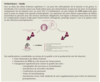
This is where the interest lies in bundling activities and services into a single payment. Bundles" are payment methods that fall between atomized payments, such as T2A and payment per day, and globalized payments, such as global allocation and capitation (Figure 1).
Three grouped payment types are most commonly promoted:
- To the episode - which mainly targets heavy surgical procedures and
and acute medical care - By care pathway - which targets, among other things, chronic diseases, cancers and
cancer and pregnancy. - "Shared savings programs - which targets a given population
and aims to encourage coordination in a territorial approach

The trend towards an intermediate bundled remuneration model is emerging throughout Europe, both in countries that remunerate hospitals on the basis of T2A and in countries that have adopted global endowment remuneration.
Indeed, these grouped remuneration methods create virtuous incentives for the coordination of the various healthcare operators and to design and to design the care offer with the patient at the center. Care operators must take into consideration all the steps, which leads to a better efficiency of the system, a cost reduction and improved quality, notably through a reduction in the rates of complications, re-hospitalization and emergency admission. This method of financing also encourages the integration of prevention strategies into the care pathway.
Another advantage of this type of remuneration is the reduction of the administrative burden for health insurance, which still has to deal with the complexity of devolving resources to health care institutions due to the complexity of the T2A financing system.
A rich pool of financing experience at
international care pathways
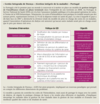
Although interest in pathway pricing appears to be relatively recent, one of the earliest examples of this payment method dates back to the 1980s, when the Texas Heart Institute instituted episode-based payment for coronary artery bypass surgery. Since that time, many pilots of episode-based or pathway-based payment have been developed in different countries (Figure 2).
These experiences are very varied and a wide range of remuneration typologies have been grouped according to different criteria:
- the type of pathology
- the period of time during which care expenses are covered
- the services and operators that are covered by the funding
At the international level, two main trends can be observed. Some countries, such as Sweden and the United States, focus mainly on short acute episodestreated mainly at the hospital level. Others, such as the Netherlands and Portugal, have focused more on the chronic disease management at the city level.

The United States is the country with the most experience in this type of financing, mainly thanks to the Center for Medicare & Medicaid Innovation, which has launched several pilots since the 1990s, and the network of private, not-for-profit hospitals that are trying to differentiate themselves to attract patients. One of the lessons to be learned from the U.S. experience is also the multitude of examples, some launched in parallel, that have tested the different systems to move forward more quickly.
Seize the opportunity to start later
France is just beginning to reflect on the evolution of the T2A towards new forms of pricing and has the advantage of being able to build its new system on the basis of international knowledge acquired over more than a decade. It is not a question of replicating in France a successful model developed elsewhere, but rather of drawing inspiration from it in order to avoid the pitfalls into which these past experiences may have fallen. It is therefore essential to understand how the different models were designed abroad.
Success stories, but challenges not to be ignored
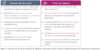
The most successful models have been implemented in sophisticated settings, with a robust computer system, well-defined quality objectives, including all the operators necessary for the complete treatment of patients, and with strong physician involvement from the design of the mechanism (Figure 3)
Funding for acute care episodes requiring surgery, such as joint replacements and coronary artery bypass grafting, are some successful examples that should be emulated.
Indeed, for this type of case, it is relatively easy to determine a very specific pathway, to measure the risk and to plan all the care that would be necessary and beneficial to the patients.
On the other hand, it seems more difficult to develop pathways for patients followed over the long term, since this implies a greater level of coordination and it becomes more difficult to define with certainty what care the patient will need.
The other aspect that is difficult in the case of long-term care pathways is deciding who will be the fund holder, which is one of the points of vigilance (Figure 3). In the case of acute episodes, the hospital appears to be the natural fund holder, but for chronic conditions this decision is much more controversial.
The hospital's positioning is changing
It is interesting to note that this change in pricing leads to a change in the positioning of the hospital. With a pathway, it is expected that the number of re-hospitalizations and complications will decrease and, consequently, the volume of activity of the hospital. On the other hand, the hospital acquires the opportunity to have a central role as a fund holder and care coordinator.
Conclusion
The evolution of remuneration methods towards financing on the basis of the patient's journey or episode is an opportunity for the hospital to become the central player in a patient-centred care offer. Know-how abroad is a source of inspiration and information, especially with regard to the design of mechanisms. Discovering and understanding these becomes a priority for those who are going to engage in experimentation.
References
Journal Officiel de la République Française, Decree No. 2018-125 of February 21, 2018, on the framework for experimentation for innovation in the healthcare system provided for in Article L. 162-31-1 of the Social Security Code.
Natacha Lemaire, " Foreign Experiences with Care Coordination: the Medicare Accountable Care Organizations in the United States ," November 2017.
Senate, "Information Report on the Financing of Health Care Facilities - No. 703," July 25, 2012.
A. Charlesworth, A. Davies, J. Dixon, " Reforming payment for health care in Europe to achieve better value ," Nuffield Trust, August 2012.
A. Fouard, A. Townsend, " Innovative financing: for what new values? ", Breakfast of the Governance and Regulation Chair, Université Paris-Dauphine, June 8, 2017.
P. Hémery, " Health Department seeks pilot for organizational innovation experiments," Hospimedia, February 20, 2018.
J. Jacobs, I. Daniel, G.R. Baker, A. Brown, W. P. Wodchis, " Bundling Care and Payment: Evidence from early adopters," Institute of Health Policy, Management & Evaluation, University of Toronto, August 2015.
H. Meyer, " Hospital's experience with heart-failure bundles could be blueprint for others ," Modern Healthcare, January 27, 2018.
A. Coelho, A. Diniz, Z. Hartz, G. Dussault, " Gestão integrada de doença renal crónica: análise de uma política inovadora em Portugal ," Revista Portuguesa de Saúde Pública, 32 (2014) 69-79.